
Ghar Soaps Review 2026: Benefits, Ingredients, Prices & Does It Really Work?
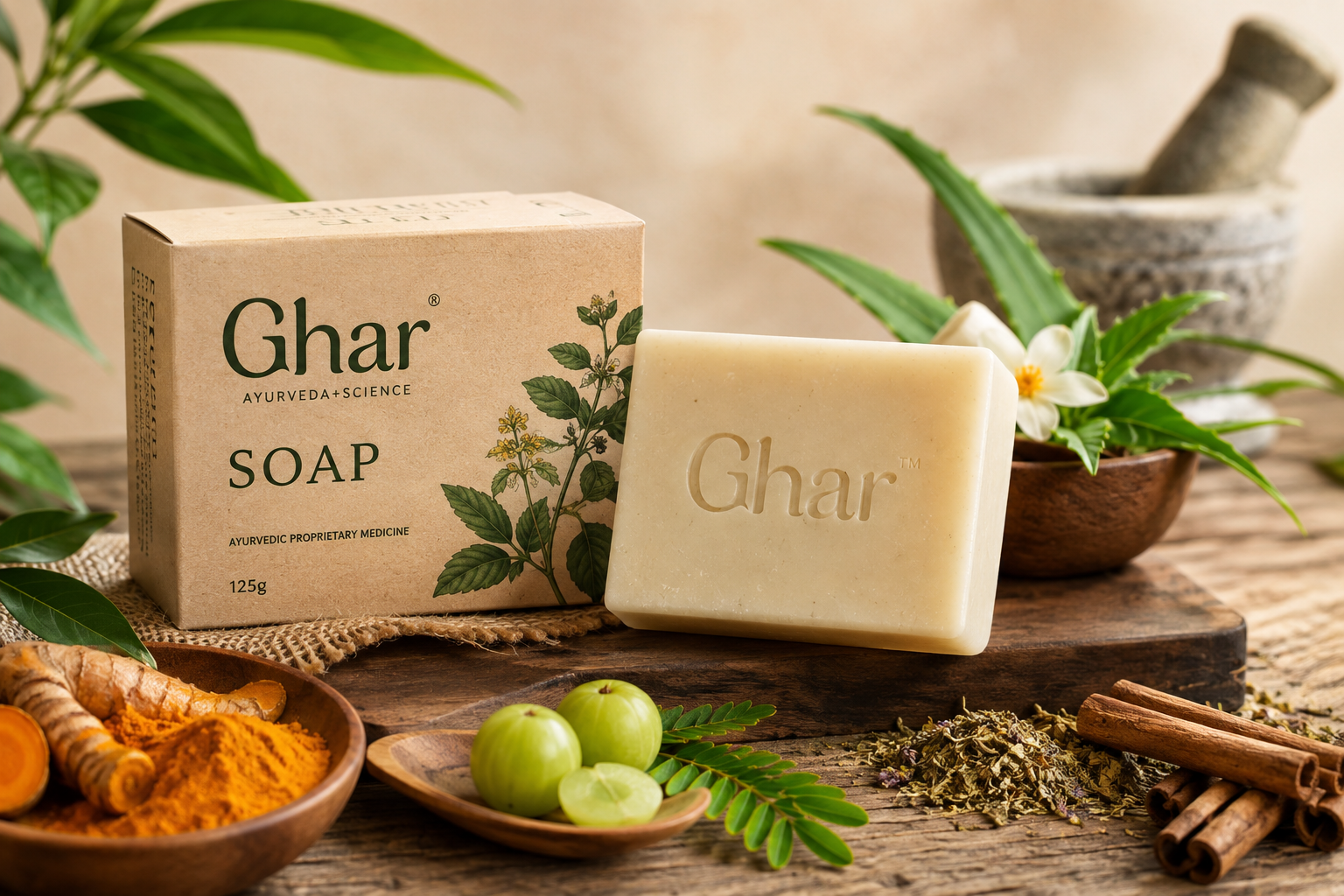
Ghar Soaps Review 2026: Benefits, Ingredients, Prices & Does It Really Work?
Bathroom shelves across India are looking a little different these days. Sulphate-loaded, mass-market bars are being pushed aside for smaller, handmade-looking soaps that promise something more personal and Ghar Soaps review has been at the centre of that shift. Built on a simple pitch of sandalwood, saffron and homegrown Ayurveda, the Pune-based brand has gone from a kitchen-table startup to a name recognised well beyond India's D2C beauty circles.
With interest in the brand still climbing in 2026, we dug into what's really inside Ghar Soaps' bars, what the science and reviews say about its tan-fading claims, and whether it's worth adding to your daily routine.
Why Ghar Soaps Is Trending Right Now
India's shift toward "clean beauty" isn't slowing down. More shoppers are actively checking ingredient lists and avoiding parabens, sulphates and synthetic fragrances, a change in behaviour that has directly fuelled homegrown Ayurvedic soap India. Ghar Soaps has ridden this wave with an approachable, relatable social media presence that doesn't lean on heavy medical jargon or celebrity endorsements, which appears to be a big part of why it keeps resurfacing in conversations about Indian skincare.
The brand's origin story adds to its appeal. It was started by stepbrothers Sayyam Jain and Sunny Jain in Pune in 2019, reportedly after the pair began gifting handmade soap bars to neighbours and realised there was real demand for it. What began as a small home operation has since scaled into a proper D2C business, backed by early-stage funding and a wider retail footprint across major online marketplaces.
What's Actually Inside Ghar Soaps
The brand's formulations lean heavily on a small set of recognisable Ayurvedic Ghar soap ingredients rather than a long, hard-to-pronounce ingredient list.
Sandalwood (Chandan)
Used in Ayurveda for centuries, sandalwood is included primarily for its calming, cooling effect on the skin. It's associated with soothing irritation and helping even out complexion over time, rather than delivering fast, visible change.
Saffron (Kesar)
This is the ingredient doing the heavy lifting. Saffron is widely linked to brightening and reducing dullness, and it's the component most of the brand's de-tan marketing is built around.
Goat Milk and Coconut Oil
These handle hydration. Goat milk is prized for softening skin, while coconut oil forms a light protective layer so the bar doesn't leave skin feeling dry, a common issue with harsher, sulphate-based soaps.
Ingredient |
What It Does |
Best For |
|
Sandalwood |
Soothes skin, supports even tone |
Sensitive or irritation-prone skin |
|
Saffron |
Brightening, mild exfoliation |
Dull or tanned skin |
|
Goat Milk |
Hydration |
Dry to normal skin |
|
Coconut Oil |
Moisture barrier |
Everyday, all skin types |
Key Benefits Reviewers Are Reporting
Gradual tan reduction: The most frequently mentioned Ghar soap benefits, especially among users who commute daily or spend long hours in the sun.
Brighter, more even-looking skin: A slower, maintenance-style effect rather than an overnight transformation.
Mild exfoliation: Saffron lifts away dead skin without the roughness of scrub-heavy bars.
Paraben and sulphate-free formulation: A key draw for buyers actively avoiding harsher chemical ingredients.
Daily-use friendly: Positioned as gentle enough for everyday use across skin types, unlike stronger occasional-use de-tan products.
Does It Actually Work? What the Evidence Suggests
Here's where a dose of realism matters. Saffron and sandalwood soaps do have a documented history in Ayurvedic skincare for brightening and soothing effects, but neither ingredient works instantly, and results from a soap which stays on skin for only seconds during a wash are inherently milder than a leave-on serum or cream.
Most user reviews cluster around a similar timeline: visible improvement in tone and texture after roughly three to four weeks of consistent, daily use, and only when paired with basic sun protection. In other words, the soap can support a routine, but it isn't a substitute for sunscreen, and expecting a dramatic before-and-after within a few days is likely to disappoint.
On the cruelty-free front, the brand states its products aren't tested on animals. That claim is self-declared rather than independently certified by bodies like Leaping Bunny or PETA, a distinction worth knowing if third-party verification matters to you.
Pricing and Where to Buy
Ghar Soaps price flagship Sandalwood and Saffron soap is sold as individual bars and multi-packs, typically in 100g and 300g sizes, with a single 100g bar generally priced in the Rs. 180-Rs. 200 range depending on the seller and pack size. A companion De-Tan Face Wash is also available and is often bundled with the soap.
The brand sells through its own website as well as major marketplaces including Amazon, Flipkart, Myntra and quick-commerce platforms. Multi-packs tend to offer better per-unit value than single bars, and it's worth comparing prices across platforms before ordering, since bundle deals shift frequently.
Who Should Try It and Who Might Skip It
Good fit for:
Buyers with normal-to-dry skin looking for a gentler, natural alternative to chemical-heavy bars
Anyone dealing with mild sun tan or general dullness from daily sun exposure
Shoppers who specifically want paraben- and sulphate-free formulations
May not be ideal for:
Those expecting fast, dramatic brightening within days
People with very reactive or sensitive skin who haven't patch-tested first
Anyone who strictly prefers liquid face washes over bar soap
The Bigger Picture
Ghar Soaps' rise mirrors a wider pattern playing out across Indian beauty right now: consumers rewarding brands that are transparent about ingredients, don't over-promise, and communicate in a relatable, non-clinical way. Whether or not one specific soap becomes a permanent fixture in someone's routine, the underlying trend toward ingredient-conscious, homegrown skincare looks set to keep growing through 2026.
FAQs
1. Is Ghar Soaps good for sensitive skin?
It's formulated without parabens and sulphates, which generally makes it gentler than conventional soaps. Still, sandalwood and saffron are active natural ingredients, so patch-testing on the inner arm first is a sensible precaution for reactive skin.
2. How long does it take to see results from Ghar Soaps?
Most users report noticeable changes in tan and dullness after about three to four weeks of consistent daily use. Results vary based on skin type, sun exposure and how regularly the soap is used.
3. Is Ghar Soaps suitable for men?
Yes. The brand markets its soaps as unisex, and the core ingredients aren't gender-specific. Men dealing with tan from daily commuting are among its most common users.
4. Does Ghar Soaps really remove tan?
It's designed to reduce tan gradually rather than eliminate it instantly. Saffron's brightening properties support a more even tone over weeks of use, and results are noticeably better when paired with daily sunscreen.
5. Where can I buy genuine Ghar Soaps products?
Ghar Soaps is available through its official website and verified listings on Amazon, Flipkart, Myntra and select quick-commerce apps. Sticking to these channels reduces the risk of counterfeit or expired stock.
Stay tuned to Trendzyvibe for the latest breaking news, trending stories and in-depth updates from India and beyond.
Leave a Reply
Your email address will not be published. Required fields are marked *